

Cinema Seat Solutions Europe
Cinema Seats Crafted
Cinema seats are one of the strongest factors behind the real quality of a movie theatre. A cinema hall may have a large screen, powerful sound, acoustic wall panels and carefully designed lighting, yet the audience experiences the entire film from the seat. If the seat is uncomfortable, noisy, narrow, poorly installed or difficult to clean, the technical strength of the hall cannot fully protect the viewing experience.
Professional cinema seats should support long sessions, create personal comfort, keep the hall visually organized and remain durable under repeated use. Standard cinema seats, VIP cinema seats, recliner models, double seats, cinema sofas and private screening room seats all serve different project needs. A multiplex, boutique cinema, VIP lounge, home cinema and private projection room should not be planned with the same seating logic.
Cinema seat selection should not be based only on appearance or price. Seat width, row spacing, screen distance, floor slope, upholstery durability, foam stability, armrest design, cup holders, folding mechanism, numbering, cleaning access and mounting method should all be evaluated together. The right cinema seat improves audience satisfaction, supports daily operation and protects the long-term value of the hall.
Cinema Seats for European Projects
European cinema projects often require clean design, durable materials, reliable production and practical project coordination. Renovation projects may need seats that fit existing floor slopes and mounting points. New cinema projects may require early coordination between architecture, acoustic planning, screen placement and seating layout. Boutique cinemas may need more customized upholstery and atmosphere-focused details.
A professional cinema seat should match the real conditions of the room. A high-capacity commercial hall may need compact and durable models. A VIP cinema room may need wider spacing and more refined finishes. A recliner hall needs more floor area because the footrest movement changes the entire layout.
For European projects, correct planning helps avoid capacity loss, poor sightlines, uncomfortable rows and maintenance problems. The seat should fit the hall, not force the hall to adapt to the wrong product.
Standard Cinema Seats
Standard cinema seats are suitable for halls that need a strong balance between comfort, capacity and durability. They are commonly used in multiplex cinemas, cultural cinema halls and general movie theatre projects.
A good standard cinema seat should include stable foam, supportive backrest form, durable upholstery, solid armrests, practical cup holders and a reliable folding seat pan. The model should allow efficient row planning while still giving the viewer enough comfort for long films.
Standard does not mean basic. With correct upholstery, clean stitching, suitable colors and proper installation, a standard cinema seat can create a professional and long-lasting hall appearance.
VIP Cinema Seats
VIP cinema seats are designed for premium halls where the audience expects more space, deeper comfort and a more refined atmosphere. These seats are usually wider, softer and more detailed than standard models.
VIP cinema seats may include larger armrests, richer upholstery, cup holders, tray tables, storage consoles and wider row spacing. The purpose is to make the premium area feel clearly different from a regular cinema hall.
However, VIP quality must be supported by durability. A seat that looks premium but quickly loses its shape, wears in the upholstery or becomes unstable will reduce the value of the room. True VIP seating should keep its comfort and appearance after repeated use.
Recliner Cinema Seats
Recliner cinema seats create a luxury viewing experience by allowing the viewer to lean back and extend the legs. They are suitable for VIP cinema halls, premium multiplex rooms, boutique cinemas, private screening rooms and home theatre projects.
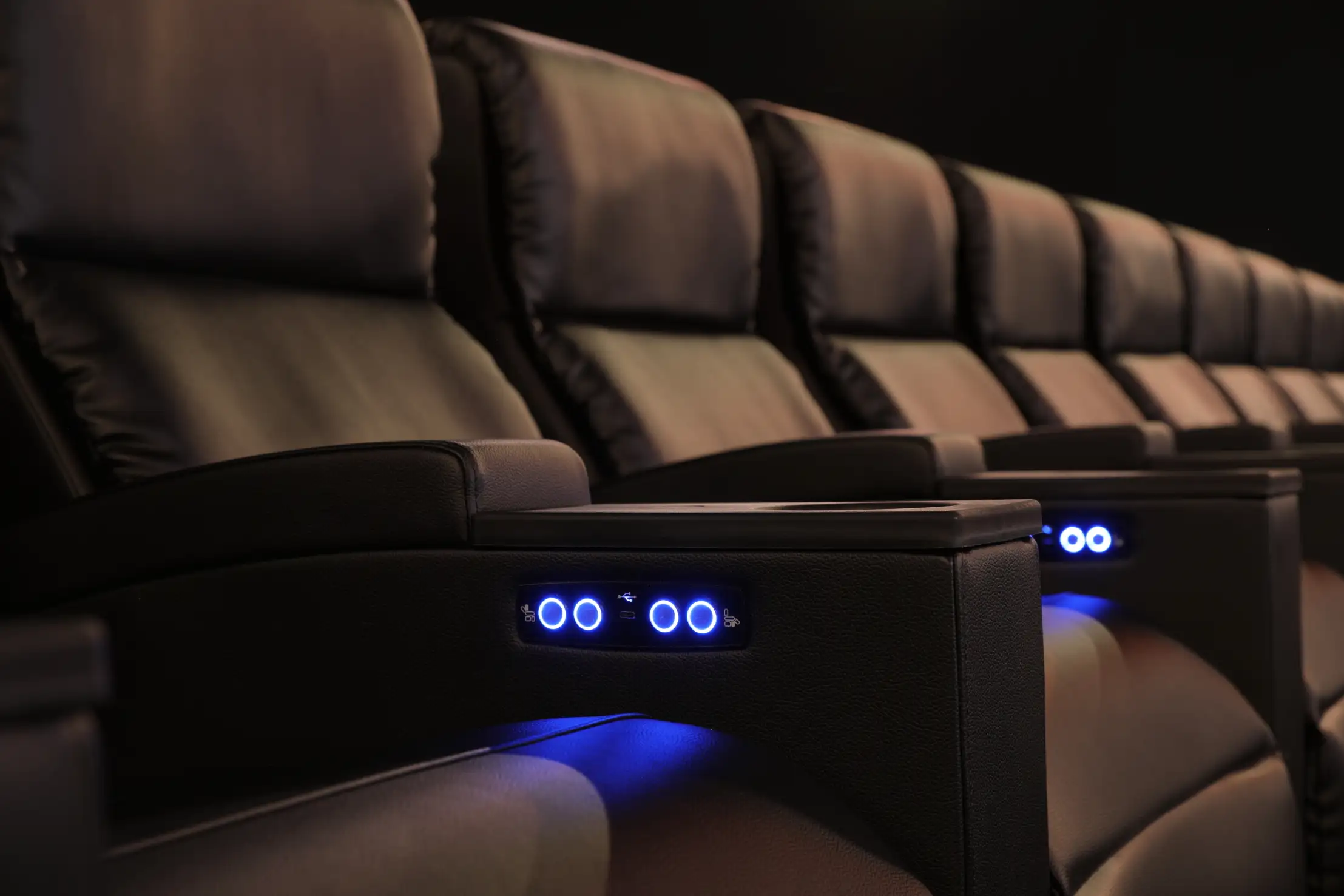
Motorized recliners provide button-controlled movement and a stronger premium feeling. Manual recliners offer reclining comfort with simpler technical requirements. In both cases, the mechanism should move smoothly, quietly and safely.
Recliner seating requires more space than standard cinema seating. Footrest movement, row spacing, electrical access, screen visibility, cleaning access and service points should be reviewed before production and installation. A recliner room should feel spacious, not crowded.
Multiplex Cinema Seats
Multiplex cinemas need seats that can handle frequent daily use. A single seat may be used by several visitors in one day, so durability and cleaning efficiency are essential.
A multiplex cinema seat should have strong upholstery, stable foam, reliable armrests, practical cup holders and a quiet folding mechanism. Cleaning teams should be able to work quickly between sessions, and the seating should remain visually consistent across the hall.
The right multiplex seating solution protects both customer satisfaction and operational efficiency. A seat that is difficult to clean or wears quickly can increase long-term costs.
Boutique Cinema Seating
Boutique cinemas often focus on atmosphere, identity and guest experience rather than maximum capacity. Seating in these halls should feel carefully selected and visually connected to the interior.
Rich upholstery, darker colors, refined armrests, softer forms and warmer materials can help create a memorable cinema atmosphere. Burgundy, black, anthracite, navy, deep green and dark brown tones can support an immersive room design.
A boutique cinema seat should support the personality of the venue while remaining durable, comfortable and easy to maintain.
Cinema Sofas and Double Seats
Cinema sofas and double seats create a warmer and more social viewing experience. They are suitable for boutique cinemas, couple seating zones, VIP rooms, private screening areas and home cinema projects.
These models may include wider cushions, shared seating, central consoles, cup holders, reclining functions or custom upholstery. They can reduce total capacity, but they can also increase the perceived value of the room when used in the right concept.
Double seats and sofas should be planned carefully. Row spacing, sightlines, circulation and cleaning access must still work correctly.
Home Cinema Seats
Home cinema seats are used in private cinema rooms, villas, media rooms and residential entertainment spaces. They should not be selected like ordinary living room furniture. Screen distance, speaker position, room size, lighting and acoustic surfaces all affect the correct seat choice.
Home cinema projects may use recliners, compact VIP seats, cinema sofas or double seats. Small rooms may need compact models, while larger rooms may support multi-row layouts with raised platforms.
The best home cinema seat matches the room proportions and creates a true cinema feeling without making the space crowded.
Private Screening Room Seats
Private screening rooms are used in hotels, clubs, corporate buildings, film spaces, luxury homes and boutique entertainment venues. These rooms usually need a more customized seating approach.
VIP seats, recliners, sofas, double seats or custom upholstered models may be selected according to the design concept. A corporate screening room may need a clean and formal look, while a luxury private room may need softer upholstery, deeper comfort and more refined details.
The seating should feel integrated with the room. It should not look like an item added after the interior was already completed.
Foam Quality
Foam quality determines long-term cinema seat comfort. A seat may look comfortable at first, but weak foam can collapse, lose shape and reduce support over time.
A good cinema seat should provide balanced support. It should not feel too hard during long films, but it should not be so soft that it loses form quickly. The seat cushion and backrest should work together to support the viewer naturally.
In VIP and recliner seats, foam quality becomes even more important because the audience expects a higher level of comfort. Stable foam protects both the user experience and the visual order of the hall.
Upholstery Selection
Upholstery affects comfort, appearance, cleaning and acoustic behavior. Fabric, artificial leather, real leather and special upholstery materials can all be used depending on the cinema concept.
Fabric can create warmth and acoustic softness. Artificial leather can be practical where easy cleaning is important. Real leather may be used in selected VIP rooms or private screening spaces. The right choice depends on usage intensity, maintenance routine, budget and design target.
Cinema upholstery should resist wear, keep its color and remain suitable for regular cleaning. A beautiful material that wears quickly can make the hall look old too soon.
Armrests and Cup Holders
Armrests define personal space and influence comfort. A good cinema armrest should feel stable, comfortable and naturally positioned. It should not be too narrow, too bulky or difficult to clean.
Cup holders are small details with a large effect on the user experience. They should be easy to reach, stable and practical for cleaning. In VIP and recliner seats, armrests may also include tray tables, control buttons, storage areas or USB access.
These details should improve comfort without making the seat complicated or difficult to maintain.
Folding Seat Mechanism
Many cinema seats include a folding seat pan. When the seat is not occupied, the seat pan rises and creates more open space between rows. This improves movement, cleaning and visual order.
The folding mechanism should be quiet, smooth and durable. A noisy mechanism can disturb viewers during the film. A weak mechanism can become loose, unstable or difficult to maintain.
Mechanism quality should be treated as a core part of the seat, not as a small technical detail. Silent movement is especially important in cinema environments.
Row Spacing and Capacity
Row spacing determines how comfortable and commercially efficient the cinema hall becomes. If rows are too tight, viewers feel restricted and movement becomes difficult. If rows are too wide, the hall may lose unnecessary capacity.
Standard cinema seats can protect capacity more efficiently. VIP seats need more space. Recliners require even more room because the footrest moves forward. This movement must be calculated from the beginning.
A successful cinema layout balances capacity, comfort, safety and revenue potential.
Sightlines and Screen View
Every cinema seat should provide a clear and comfortable view of the screen. Poor sightlines reduce audience satisfaction and can make some rows less valuable.
Screen height, floor slope, riser height, row distance, backrest height and viewing angle should be evaluated together. In recliner halls, visibility should be checked in both upright and reclined positions.
Good sightlines help every seat feel valuable, not only the center rows.
Acoustic Relationship
Cinema seating is part of the acoustic environment. Upholstery, foam, seat density, carpet, wall panels and audience presence all influence sound behavior.
Fabric seating may create a softer acoustic effect. Leather or artificial leather surfaces may behave differently. Seating, acoustic wall panels, flooring and speaker layout should be considered together.
A successful cinema hall should not only look comfortable. It should also sound balanced, clear and immersive.
Cleaning and Maintenance
Cinema seats must be easy to clean and maintain. Popcorn, drinks, dust and frequent audience turnover create daily cleaning needs. Seat surfaces, cup holders, armrests, consoles and row spacing all affect cleaning efficiency.
Fabric upholstery should be selected with durability and stain management in mind. Artificial leather and leather may be easier to wipe in some areas. Recliner mechanisms and consoles should remain accessible for inspection and service.
Maintenance-friendly cinema seats help protect the hall’s appearance and reduce operational pressure.
Seat Numbering
Seat numbering supports ticketing and visitor flow. In modern cinema halls, guests need to find their seats quickly, especially in low light before the film begins.
Numbers may be placed on armrests, seat fronts, backrests or separate plates depending on the model. They should be visible, durable and easy to read.
A clear numbering system improves both guest experience and hall management. It should be planned as part of the seating project, not left as a final detail.
Cinema Renovation Projects
Replacing old cinema seats can transform a hall quickly. Worn upholstery, collapsed foam, broken cup holders, noisy mechanisms or outdated colors can make the cinema feel less attractive.
Before renovation, existing row spacing, floor slope, mounting points, screen distance, aisle positions and capacity should be reviewed. The new seat should fit the current structure without unnecessary construction work.
A renovation can also include VIP upgrades, recliner conversion, new upholstery colors, improved numbering or a complete hall identity update.
New Cinema Projects
New cinema projects allow seating to be planned from the beginning. This creates better coordination between screen size, floor slope, acoustic design, lighting, aisle layout and seat type.
If seating is selected too late, the hall structure may not match the preferred model. This is especially important for VIP and recliner seating because they require more space. Early planning helps protect comfort, capacity and budget.
Cinema seats should be treated as a central part of the audience experience, not as a final furniture choice.
European Cinema Projects
European cinema projects often need a combination of clean design, durable materials, consistent production and practical delivery coordination. Renovation projects may have strict timing. Boutique halls may require special upholstery. Multiplex projects may require high quantities with stable quality.
A manufacturer-based approach helps project teams control dimensions, upholstery, colors, foam structure, armrests, cup holders, recliner mechanisms, numbering and mounting options. This is especially important when many seats must match in comfort, color, function and finish.
Simko Seating can support European cinema projects with professional seat solutions for standard halls, VIP rooms, recliner areas, boutique cinemas and private screening spaces.
Manufacturer-Based Supply
Manufacturer-based cinema seat supply gives project teams better control over details. Seat dimensions, upholstery, colors, foam structure, armrests, cup holders, recliner mechanisms, numbering and mounting options can be evaluated according to the project.
This is especially important when many seats must match in comfort, color, function and finish. Controlled production supports consistency and reduces project risk.
A professional manufacturer can help create different solutions for standard halls, VIP rooms, recliner areas, boutique cinemas and private screening spaces within the same project.
Quality and Price Balance
Cinema seats should not be selected only by the lowest price. A weak seat can create higher long-term costs through upholstery wear, foam collapse, mechanism noise, broken accessories, difficult cleaning and early replacement.
The correct approach is to evaluate comfort, durability, maintenance, layout suitability and price together. A good cinema seat supports the viewer, protects the hall’s appearance and remains reliable under repeated use.
A strong quality-price balance is especially important in cinema projects where hundreds of seats are required.
Cinema Seat Categories
Professional cinema seat projects may include standard cinema seats, VIP cinema seats, motorized recliners, manual recliners, cinema sofas, double cinema seats, home cinema seats, private screening room seats, boutique cinema seats, cup holder seats, tray table seats and numbered cinema seats.
Each category serves a different purpose. The right selection depends on hall type, room size, comfort target, audience profile, cleaning routine, budget and long-term project goals.
Conclusion
Cinema seats are essential to audience comfort, hall identity and long-term cinema value. The right seat improves the viewing experience, supports capacity planning, protects visual quality and makes daily operation easier.
A successful cinema seat project requires ergonomic comfort, stable foam, durable upholstery, reliable mechanisms, correct row planning, clear sightlines, practical cleaning and a strong balance between quality and price. When cinema seats are selected according to the real conditions of the hall, the result is a more comfortable, more professional and more valuable cinema environment.
For professional cinema seat solutions, visit the official website.
Created By : Simko Cinema Seating